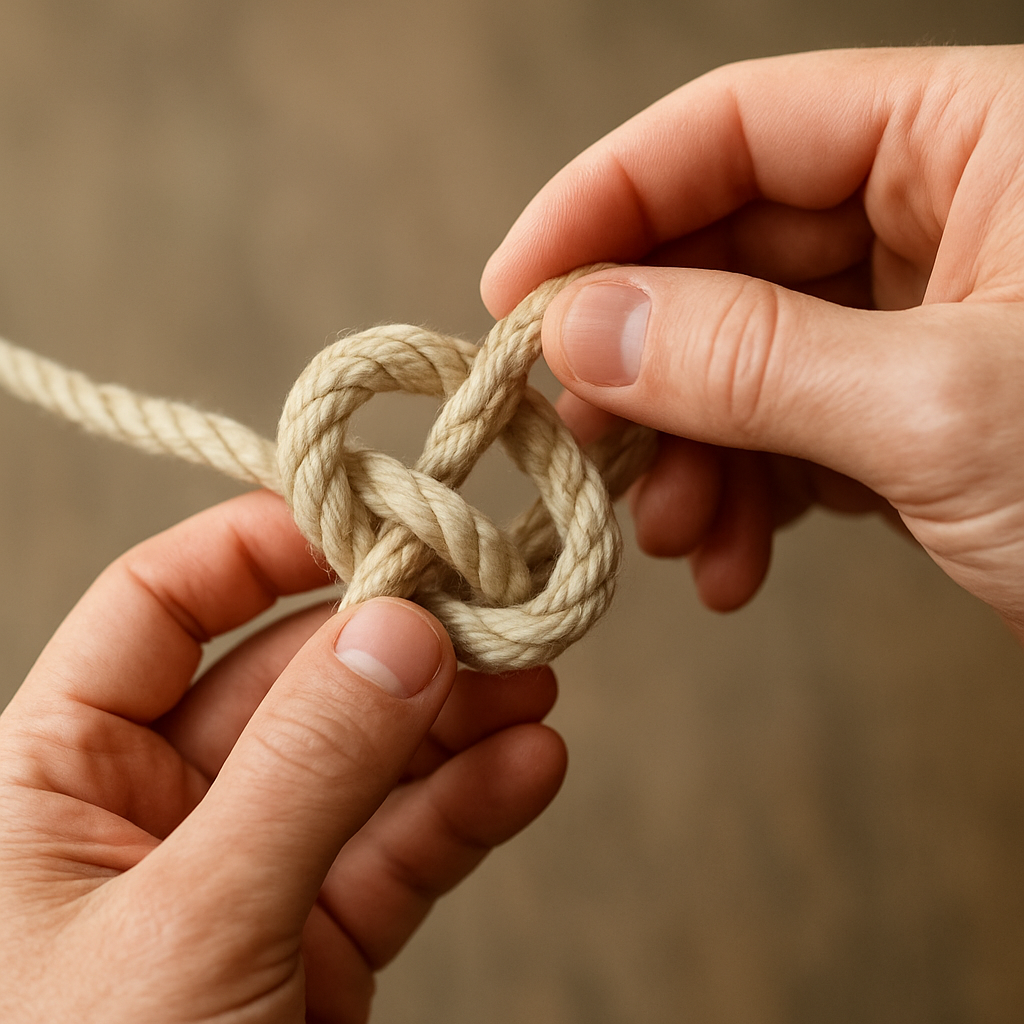
How to tie a knot
HobbiesHow to tie a knot
I’ve spent over a decade handling cordage in everything from weekend sailing trips to alpine training camps. If you are looking for how to tie a knot that actually holds under stress, you are already ahead of most beginners who just guess and hope for the best. Rope work isn’t magic, it is friction mechanics and muscle memory working together. Back in the day, hunters and sailors treated natural fibers like lifelines. Today, synthetic polymers like nylon and polyester stretch under tension, which changes how friction behaves. Understanding this material shift is crucial before you start practicing.
Building a foundation: how to tie a basic knot
Every expert starts with the fundamentals. When learning how to tie a basic knot, the biggest hurdle isn’t finger dexterity, it’s terminology. You need to clearly separate the standing end, which carries the main load, from the working end, the active tail you manipulate. In my experience, people who rush this step end up creating jammed tangles that require a knife to fix. The learning curve is steep at first, but after a few hundred repetitions, your hands develop automatic recall. This progression mirrors how human knot theory evolved from ancient trial-and-error to modern engineering standards.
The absolute starter: how to tie a simple knot
- Form a loop by crossing the working end over the standing part
- Pass the tail through the created opening
- Pull both ends until the structure tightens evenly
This overhand configuration is the building block for dozens of complex hitches. If you search online for how to tie a slip not, you will notice it is just a common misspelling of the adjustable version we will cover next.
Adjustable loops for daily use: how to tie a slip knot
Need a loop that cinches down when pulled but releases when pushed? That is exactly what this design does. I use it constantly for securing tarps, organizing gear bags, or creating temporary anchor points. The sliding mechanism relies on controlled friction. Unlike fixed loops, this one adapts to changing diameters. Many outdoor enthusiasts look for guides on this specific method because it bridges the gap between utility and speed.
Maritime reliability: how to tie a bowline knot
If you ask seasoned sailors which loop never jams under extreme load, they will point to this classic. It forms a fixed eye at the rope’s end without slipping or binding. The structure distributes stress evenly across the fibers, making it ideal for rescue scenarios and mooring lines. Historically, it was known as the king of loops, and even with modern carabiners and hardware, its simplicity keeps it relevant.
Practical walkthrough: how to tie a bowline knot step by step
- Create a small overhand loop near the rope’s end
- Thread the working end upward through the loop
- Pass it behind the standing part, then back down through the original opening
- Dress the knot by tightening each strand sequentially
Whether you call it how to tie a bowline or simply the sailor’s eye, the execution remains identical. Practice it slowly until the motion becomes fluid.
Joining ropes securely: how to tie a square knot
Used for centuries in first aid and cargo lashing, this configuration connects two equal-diameter lines. It sits flat against the surface and releases quickly when needed. I’ve seen it fail only when people use mismatched rope thicknesses or apply sideways shear forces. For straight-line tension, it performs reliably.
Historical parallel: how to tie a reef knot
The same structure that once held sails on 18th-century frigates now secures modern expedition packs. The principle of right over left, then left over right, remains unchanged across centuries of maritime tradition.
Understanding this method means recognizing its limitations. It works best for light to moderate loads where easy untying is prioritized over absolute security under dynamic stress.
Climbing standard: how to tie a figure eight knot
This loop is the industry benchmark for attaching harnesses. Its symmetrical shape makes visual inspection straightforward, and it retains roughly 75 to 80 percent of the rope’s original breaking strength. When climbers search for guides on this design, they are usually preparing for vertical ascents or top-rope setups. The design resists unthreading even after severe shock loading.
Alternative notation: how to tie a figure 8 knot
You will see both spellings in manuals and online forums. The numeric version is purely a shorthand adaptation for digital typing. Whether you look up how to tie a figure 8 or spell it out completely, the technique involves a continuous zigzag path that doubles back through the initial turn. I recommend practicing with 8mm to 10mm cord until the tracking pattern feels natural.
| Configuration | Primary Use | Load Behavior |
|---|---|---|
| Slip loop | Temporary cinching | Adjustable under tension |
| Fixed eye | Rescue, mooring | Static, non-sliding |
| Joining bend | Packaging, first aid | Flat profile, easy release |
| Terminal loop | Climbing, fall arrest | High security, inspectable |
Structural packing: how to tie a box knot
This method creates a rigid, interwoven structure ideal for securing rectangular objects or bundling heavy items. It requires more initial manipulation but pays off when you need a stable grip without additional hardware. I use it frequently for transporting firewood or organizing workshop materials. The crossing pattern locks itself under compression, making it highly efficient for static storage.
Mastering these techniques takes patience. The fastest way to figure out how to tie a knot easy is to stop watching tutorials passively and start handling actual cordage. Your fingertips will learn the tension thresholds faster than your brain can memorize diagrams. For deeper historical references and verified safety charts, you can check materials from specialized outdoor associations like knots.ru. Consistent practice transforms clumsy fumbling into reliable skill, and once your hands remember the patterns, you will probaly wonder why you ever struggled with such a simple techniqe.