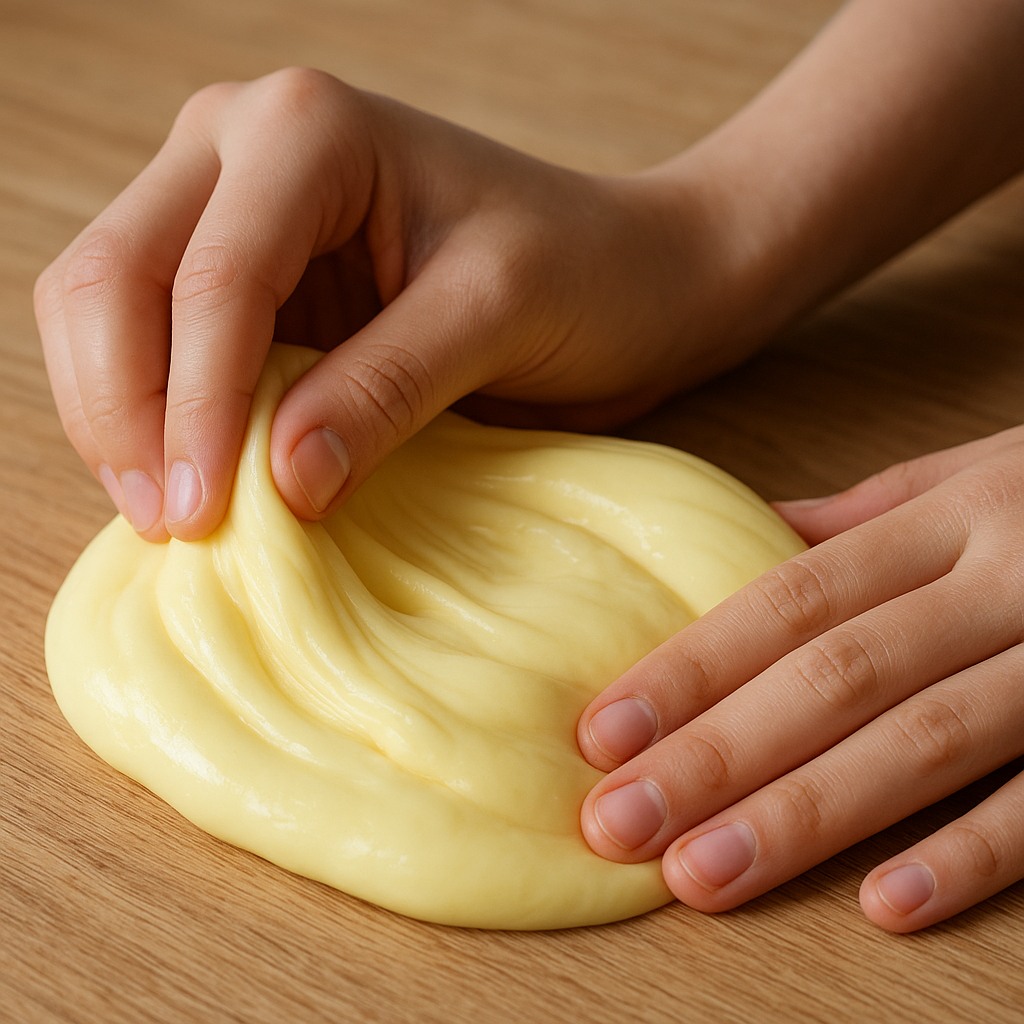
How to make butter slime
HobbiesHow to make butter slime: The Complete Texture Masterclass
Back when I first started experimenting with DIY polymers in the early twenty-twenties, the scene was entirely different. What began as a simple glue and borax experiment has evolved into a serious sensory craft with real chemistry behind it. Today, understanding polymer cross-linking and viscosoty control is just as important as picking the right PVA base. The hobby has shifted from kids’ table play to a structured stress-relief practice for adults, and the learning curve shows it. You will notice how techniques have transformed over the past decade: from unpredictable batches to precise activater ratios that deliver consistent results. The material science has matured, and the trial-and-error phase is largely behind us.
How to make slime less sticky without losing elasticity
Sticky hands ruin the experience. The issue usually stems from incomplete cross-linking or excess moisture in your base. If you are figuring out how to make slime less sticky, start by checking your solution concentration. A few drops of contact lens fluid mixed with baking soda works better than flooding the mix. Let the batch rest for ten minutes before kneading. The chains need time to align properly.
How to make slime not sticky on contact
Surface tackiness happens when humidity spikes or your container traps condensation. Wipe your workspace with isopropyl alcohol, keep your hands dry, and add a micro-dose of glycerin to seal the surface tension. Temperature matters more than most guides admit. This approach guarantees a clean pull every time.
How to make fluffy slime for sensory relief
Air incorporation changes everything. When people ask how to make fluffy slime, they usually want that cloud-like drag that dissipates stress on contact. Shaving foam is the traditional route, but instant snow powder gives a crisper texture. Fold gently. Overmixing collapses the air pockets and turns the batch dense.
- Use high-density shaving foam for volume
- Add powder incrementally to control weight
- Avoid mechanical mixers to preserve structure
How to make clay slime that holds its shape
Soft modeling clay introduces structural integrity. To learn how to make clay slime, you need to knead the clay into the PVA base before activating. This creates a composite material with memory. It stretches, tears cleanly, and recovers its shape faster than standard mixes. Perfect for sculpting sessions.
How to make slime stretchy from the start
Elasticity depends on the bond strength between polymer chains. If you want to know how to make slime stretchy, control your activator drops. Add slowly, fold, then test the pull. Too fast and you get a brittle snap. Too slow and it pools. The sweet spot sits at a steady cross-link.
Many crafters struggle when batches harden in storage. Figuring out how to make slime more stretchy requires moisture reintroduction. A single drop of warm water or a pea-sized amount of lotion, worked in with patience, breaks the rigid bonds and restores the pull. I have seen countless batches ruined by rushing this step.
Texture is not an accident. It is a controlled reaction between moisture, polymer length, and cross-link density. Respect the chemistry, and the material will behave exactly as you intend.
How to make slime soft and stretchy again
Old batches lose their glide. To execute how to make slime soft and stretchy again, warm the container slightly, then fold in a touch of glycerin or hand sanitizer. The heat opens the polymer matrix, allowing the additive to penetrate evenly. Knead for three minutes. You will feel the shift.
| Modifier | Function | Safe Dose |
|---|---|---|
| Contact lens solution | Activator / Cross-linker | 1–2 drops per 100ml |
| Shaving foam | Aeration / Volume | 30% of base volume |
| Soft clay | Structure / Memory | 15–20g per batch |
| Glycerin | Plasticizer / Recovery | Half teaspoon max |
Sometimes you actually want grip. Learning how to make slime sticky helps when you need high adhesion for textured surfaces. Increase humidity exposure or reduce the activator ratio slightly. If you need to know how to make slime more sticky without turning it into glue, a light mist of water during folding does the trick. The trick to how to make slime fluffy actually lies in the folding technique, but if you want to know how to make slime stretchier without over-activating, slow manual kneading with body heat is your best bet. The same logic applies when you wonder how to make my slime more stretchy after a dry spell.
For those tracking long-term storage, you might need to know how to make slime stretchy again after months in the fridge. Bring it to room temperature, then fold in a micro-dose of conditioner. The lipids lubricate the chains. If your goal is to make slime sticky again after it dried out completely, rehydrate it with a damp paper towel sealed in a container overnight. The slow absorption prevents surface cracking. I have tested this across dozens of batches, and the recovery rate stays above eighty percent when handled correctly.
Regional suppliers now carry refined PVA blends with consistent viscosity, which simplifies the entire process. You can check updated activator charts and sourcing guides at Craft Hub for the latest regional formulations. Focus on ratio control, temperature management, and patient folding. The texture will follow.