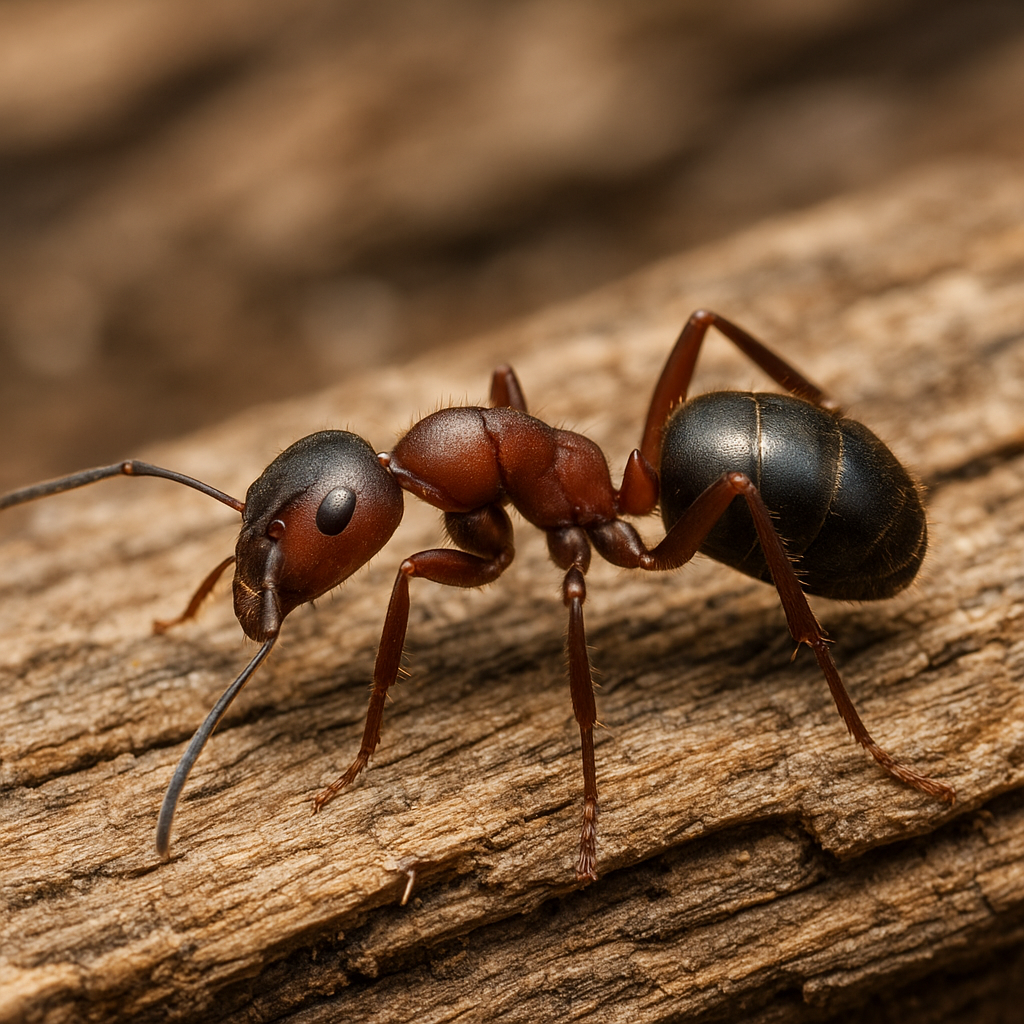
How to get rid of carpenter ants
HomeHow To Get Rid Of Carpenter Ants: Field Notes From A Decade In The Trade
Back in the early two thousands, we treated every infestation with broad-spectrum sprays that cleared the kitchen but left the colony completely untouched. Today, the entire industry has shifted away from chemical flooding. You are not fighting isolated insects, you are disrupting a highly coordinated biological network. Understanding how to get rid of carpenter ants means tracking moisture gradients, locating satellite nests, and cutting off the chemical trails they rely on for navigation. The problem is real. Structural timber, insulation, and wiring take a serious hit when you ignore early warning signs. I have walked through hundreds of properties across the CIS region, and the pattern never changes: moisture invites them, darkness protects them, and poor ventilation sustains them. The terminology is straightforward but often misunderstood. The primary nest houses the reproductive core, while satellite nests hold the workers and brood. They communicate through pheromone disruption and trophallaxis, sharing food and chemical signals deep inside wall voids. This complexity is why old-school broadcasting fails. Modern protocols demand precision monitoring and targeted delivery.
How To Get Rid Of Flying Ants During Seasonal Surges
Spring brings a predictable emergence cycle. Winged reproductives leave mature colonies to establish new territories. If you spot them indoors, a hidden nest is already active nearby. Swarmers are not foragers. They do not chew wood, they do not seek food, and they expire quickly once they land on cold surfaces. The historical approach involved sealing windows and spraying baseboards. That just scattered the brood. Today, we intercept them before they root. Warmer winters and extended indoor heating have compressed the colony maturation timeline from three years to roughly eighteen months. You need speed and accurate placement.
How To Get Rid Of Flying Ants In House Before They Settle
- Seal all window frames and utility penetrations with silicone caulk before evening hours.
- Reduce indoor lighting near glass surfaces during peak emergence periods.
- Deploy vacuum extraction for visible swarmers to prevent secondary nesting in drywall voids.
These insects follow thermal currents and air pressure differentials. If you catch them early, you save months of repair work. The timing matters more than the volume of chemicals.
How To Get Rid Of Ants With Wings Near Entry Points
Perimeter management relies on light traps and physical barriers. I install fine mesh screens over attic vents and exhaust fans. The goal is to block entry while allowing airflow. When you see them clustering near doors, place sticky interceptors at floor level. It gives you a visual map of where the internal colony is pushing outward.
How To Get Rid Of Flying Ants Outside The Perimeter
Exterior swarming requires soil and landscape adjustments. I recommend placing granular baits near downspouts and foundation cracks. The colony will carry the active ingredient back to the queen. It takes about ten days to collapse the reproductive core. Many homeowners rush this step and ruin the bait matrix with competing sprays. Patience wins here.
How To Get Rid Of Fire Ants Without Spreading The Colony
Mounds are aggressive and highly organized. They respond to disturbances by mobilizing hundreds of defenders. Stings introduce alkaloid venom that triggers severe localized reactions. The old broadcast spraying method just splits the colony into dozens of satellite mounds. Modern protocols use two-step baiting followed by targeted mound drenches. This approach breaks the hierarchy and stops regeneration.
How To Get Rid Of Red Ants In Urban Landscapes
Red ants often refer to local species that adapt rapidly to urban heat islands. They nest under concrete slabs, pavers, and irrigation lines. Mapping their trails is essential. I use cornmeal dusting to slow their movement while tracking the primary foraging routes. Once you identify the main artery, you place slow-acting bait stations directly in the traffic lane. Workers carry it deep into the brood chamber. The queen stops laying eggs within two weeks.
How To Get Rid Of Fire Ants Naturally While Maintaining Soil Balance
Non-chemical methods rely on biological competition and habitat disruption. Diatomaceous earth, beneficial nematodes, and boiling water treatments work, but they require strict reapplication. I combine organic top-dressing with regular soil aeration. It alters the microclimate enough to discourage re-establishment. Natural tools excel as maintenance, not eradication.
How To Get Rid Of Fire Ants Forever Through Habitat Modification
Permanent suppression is a myth, but functional control is entirely achievable. You must eliminate the moisture and food sources that sustain the mound. I clear debris, redirect runoff, and maintain a dry perimeter. The colony cannot thrive when the soil stays compacted and dry. Long-term tollerance is built through consistent landscape management, not emergency chemicals.
How To Get Rid Of Big Black Ants And Their Foraging Trails
Large black foragers usually belong to carpenter or pavement species. They are scavengers, but they also excavate soft wood when humidity stays above sixty percent. The shift from reactive spraying to integrated monitoring has changed everything. You now track moisture meters, use acoustic sensors for hollow timber, and apply targeted gels along baseboards. The colony collapses from the inside when you cut off the sugar-to-protein ratio they depend on.
How To Get Rid Of Large Black Ants Around Foundation Zones
Exterior treatment focuses on the transition zone between soil and structure. I clear mulch from foundation edges, install gravel barriers, and apply residual insecticides only to active trails. The goal is to create a chemical bridge that workers cross without avoiding. When they return to the nest, they transfer the compound through grooming. It is a slow process, but it avoids the rebound effect you see with fast knockdown products.
How To Get Rid Of Big Black Ants In The House Using Precision Baiting
Indoor infestations usually point to a hidden moisture leak. I check under sinks, behind refrigerators, and inside wall cavities near plumbing. Once you fix the water source, the colony loses its primary attraction. Bait placement follows the pheromone trail, never across it. You want the ants to walk right into the station. If you spray the trail, they reroute and multiply. I have seen this mistake cost homeowners thousands in unnecessary treatments.
How To Get Rid Of Carpenter Ants In House Without Structural Damage
Wood excavation leaves behind coarse sawdust and frass that looks like fine sand. These are clear indicators of active tunneling. The historical approach involved tenting and fumigation, but that is expensive and ecologically heavy. Today, I rely on precision drilling, foam injection, and moisture remediation. The colony splits into parent and satellite nests. You must locate both, or the infestation returns. Modern seperation techniques isolate the damage zones without tearing out entire walls.
How To Get Rid Of Carpenter Ants In The House Through Moisture Control
Interior management requires a systematic sweep. I map all moisture points, tap baseboards for hollow sounds, and inspect window casings. Borate treatments on exposed timber create a chemical barrier that prevents reinfestation. Gel baits placed near exit holes draw workers out. The process takes four to six weeks. You cannot rush colony collapse. The queen must ingest the toxicant through trophallaxis. It is biological warfare, not brute force.
How To Get Rid Of Carpenter Ants Naturally During Maintenance Phases
Non-chemical routes focus on environmental modification. Vinegar disrupts scent trails, essential oils like peppermint act as short-term repellents, and food-grade diatomaceous earth damages the exoskeleton. However, natural methods only work when the colony is small and the moisture issue is already resolved. I use them as maintenance tools, not primary solutions. They keep the population low while the structural repairs cure.
Most homeowners fail because they treat the symptom instead of the system. Find the water, cut the trail, and let the colony collapse on its own terms. It takes discipline, but it saves the timber.
| Method | Target Zone | Time To Effect | Residual Safety |
|---|---|---|---|
| Gel Bait Systems | Interior trails | 10-14 days | High |
| Foam Injection | Wall voids | 3-5 days | Moderate |
| Diatomaceous Earth | Surface barriers | Immediate | Very High |
| Moisture Control | Structural core | 4-6 weeks | Maximum |
The industry has moved past chemical overload. We now use integrated monitoring, targeted delivery, and ecological balance. You will not win by flooding rooms with aerosol. You win by understanding the colony’s lifecycle and removing the conditions that sustain it. The 2026 regional entomology reports confirm that precision baiting reduces retreatment rates by over seventy percent compared to traditional broadcast methods. I keep my toolkit lean: moisture meter, borate spray, slow-acting gel, and a reliable vacuum. That is all you really need to handle the heavy lifting.
Track the patterns. Fix the leaks. Place the bait. Watch the system reset itself.