How to Clean a Car Interior: Seats, Carpet, Dash and Windows
AutoThe easiest way to clean a car interior is to remove loose dirt first, then work by surface. Vacuum the seats and carpet before using liquid cleaner, use upholstery cleaner for cloth, a leather-safe product for leather seats, a low-gloss interior cleaner for the dashboard and automotive glass cleaner for the windows. Clean the glass last so dust and spray from the rest of the interior do not create new streaks.
A good order is:
- Remove trash and personal items.
- Take out the floor mats.
- Vacuum seats, carpet and crevices.
- Clean cloth or leather seats.
- Clean carpet and mats.
- Wipe the dashboard and hard trim.
- Clean screens carefully.
- Clean the inside of the windows last.
- Let damp upholstery dry completely.
The basic rule is simple: remove dry dirt before introducing liquid cleaner.
What Do You Need to Clean a Car Interior?
You do not need a cabinet full of professional detailing products.
For most interiors, a basic kit can include:
- a vacuum with a crevice attachment;
- several clean microfiber cloths;
- a soft detailing brush;
- an automotive interior cleaner;
- automotive glass cleaner;
- upholstery or carpet cleaner when needed;
- dedicated leather cleaner if the vehicle has leather seats.
Different materials need different treatment. A product that is safe on plastic trim may not be suitable for a touchscreen, leather or aftermarket window tint.
Consumer Reports similarly recommends matching the cleaner to the surface rather than treating the entire cabin with one household product.
Consumer Reports — How to Clean Your Car’s Interior
How to Clean Cloth Car Seats
Fabric seats collect dust, crumbs, body oils and spills, but the biggest cleaning mistake is using too much liquid.
1. Vacuum Thoroughly
Vacuum the seat surface before applying cleaner.
Pay particular attention to:
- stitching;
- seams;
- the area between the seat bottom and backrest;
- edges near the center console;
- spaces around seat rails.
Removing loose grit first keeps you from rubbing it deeper into the fabric.
2. Treat Visible Stains
Use a cleaner intended for automotive upholstery.
Follow its instructions rather than assuming more product will work better. For an unfamiliar cleaner, test a small hidden area first.
3. Agitate Gently
If the product instructions allow it, use a soft upholstery brush to work the cleaner into stained areas.
Aggressive scrubbing can damage fabric or leave the cleaned section looking different from the surrounding material.
4. Remove Excess Cleaner
Blot or wipe away residue with a clean microfiber cloth. For deeper cleaning, an upholstery extractor can be useful if you already have one and can dry the seat properly afterward.
5. Let the Seat Dry Completely
Avoid soaking the padding.
Moisture trapped inside a seat can create musty odors and may contribute to mold or mildew. Leave windows or doors open when conditions allow, or use airflow to help the upholstery dry before the car is closed for a long period.
What Can You Use to Clean Car Carpet?
Start with a vacuum rather than carpet cleaner.
Remove the floor mats first so you can reach dirt around seat tracks, under pedals and along the edges of the cabin.
For normal carpet cleaning, you can use:
- automotive carpet cleaner;
- automotive carpet/upholstery cleaner;
- a soft brush;
- clean microfiber cloths;
- an extractor for deeper cleaning when appropriate.
A practical process is:
- Remove the mats.
- Vacuum carpet thoroughly.
- Spot-treat stains.
- Apply carpet cleaner according to the label.
- Gently agitate stubborn areas if recommended.
- Remove excess cleaner and residue.
- Let the carpet dry fully.
Avoid flooding the carpet with water. Vehicle carpeting has padding and other materials beneath it that can hold moisture for much longer than the surface suggests.
For rubber or all-weather mats, remove them and clean them separately so dirty runoff does not end up back inside the car.
How to Clean Leather Car Interior
Leather should not be cleaned the same way as cloth upholstery.
Many modern automotive leather surfaces have protective coatings, so the safest approach is generally gentle cleaning rather than aggressive scrubbing or strong household chemicals.
A Simple Leather-Cleaning Process
- Vacuum dirt from seams and edges carefully.
- Test the cleaner on an inconspicuous area.
- Put leather-safe cleaner on a cloth or applicator if directed.
- Work in small sections.
- Wipe away residue with clean microfiber.
- Apply a suitable automotive leather conditioner if recommended for that material.
Avoid using strong degreasers, bleach, hydrogen peroxide or harsh solvents as universal leather cleaners.
A dedicated product is useful because automotive leather, vinyl and coated synthetic materials can react differently to general-purpose household products.
Do not assume that a shiny finish means the leather is cleaner. Clean leather should not need to feel greasy or heavily coated.
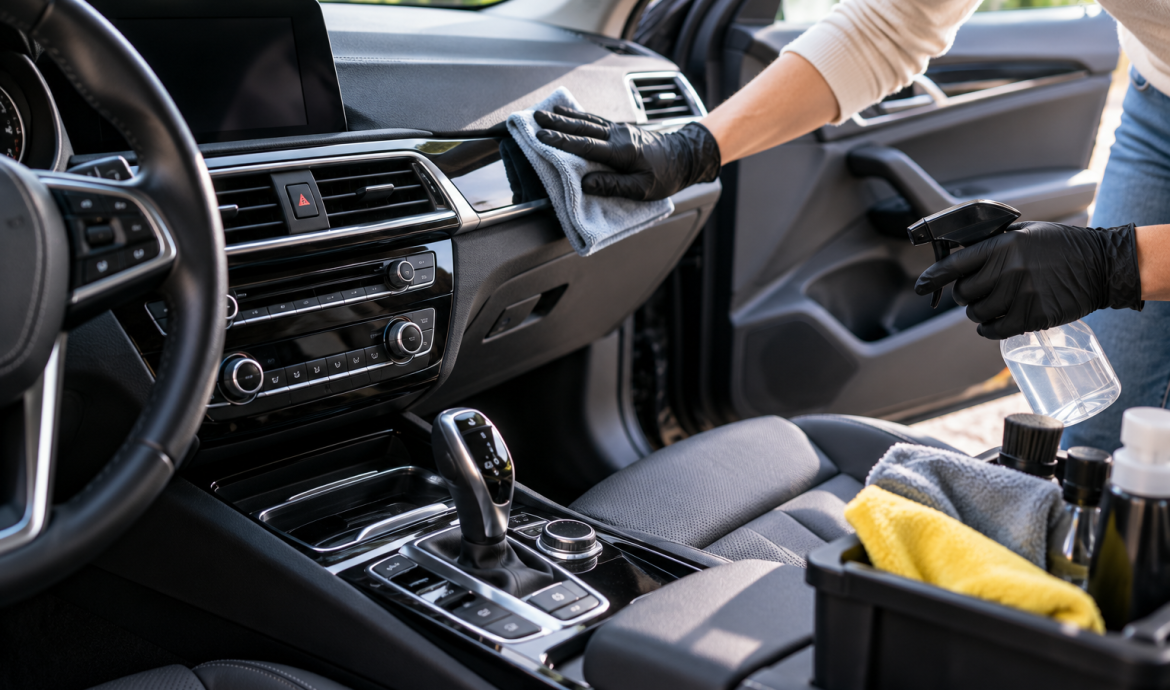
Best Way to Clean a Car Dashboard
Dashboard cleaning should begin dry.
Use a microfiber cloth, soft detailing brush or vacuum to remove loose dust from:
- the top of the dash;
- vents;
- seams;
- buttons;
- cupholders;
- the center console.
Once loose dirt is gone, use an automotive interior cleaner labeled as compatible with the specific plastic, vinyl or soft-touch trim in your car.
Apply a modest amount rather than saturating the surface.
A matte or low-gloss finish is usually preferable on the upper dashboard. Heavy glossy products can reflect sunlight into the windshield and create distracting glare.
Consumer Reports also cautions against treating every interior surface with the same chemical and recommends surface-appropriate products.
Consumer Reports — How to Keep Your Car Really Clean
How to Clean Inside Car Windows Without Streaks
The inside of a windshield often looks dirty even when the outside is clean.
Common causes include:
- fingerprints;
- ordinary dust;
- smoke residue;
- oily film;
- residue from plastics and other interior materials.
For cleaning inside car windows, use a clean lint-free microfiber cloth and automotive glass cleaner.
A Streak-Reducing Method
- Park in the shade if possible and let hot glass cool.
- Use a clean microfiber cloth that has not been used on the dashboard.
- Spray a small amount of cleaner onto the cloth rather than flooding the glass.
- Wipe the entire surface methodically.
- Use a second dry microfiber cloth for the final buff.
- Lower side windows slightly so you can clean the upper edge.
Using two cloths helps because the first removes grime while the second picks up remaining moisture or residue.
Do not reuse a microfiber cloth that already contains dashboard dressing or interior cleaner. Even a small amount of oily residue can create haze on glass.
Car and Driver also recommends lint-free microfiber for automotive glass and notes that many automotive glass cleaners are formulated without ammonia because ammonia may be unsuitable for some aftermarket tint films.
Car and Driver — Best Car Glass Cleaners Tested
Can You Use Household Glass Cleaner on Car Windows?
Sometimes, but check the formulation first.
The biggest concern is aftermarket tint. Ammonia-containing glass cleaners may be inappropriate for certain tint films.
If the vehicle has tint — or if you do not know exactly what type of tint is installed — an automotive glass cleaner specifically labeled safe for tinted windows is the simpler choice.
There is also no reason to use the same product on the windshield and infotainment display. They are different surfaces with different coatings.
How to Clean Car Touchscreens and Displays
Treat infotainment screens more like electronics than dashboard plastic.
Modern displays may use anti-glare or anti-fingerprint coatings that can be damaged by unsuitable cleaners.
For routine cleaning:
- switch the display off if practical;
- use a clean, soft microfiber cloth;
- remove dust gently;
- use a cleaner approved by the vehicle or screen manufacturer if a dry cloth is not enough.
Avoid spraying dashboard cleaner directly onto the screen.
Ammonia-based glass products can also be unsuitable for coated displays. Before using alcohol or another chemical cleaner, check the owner’s manual or manufacturer’s care instructions.
The safest approach is usually to begin with the least aggressive cleaning method and use stronger products only when their compatibility is known.
What Not to Use When Cleaning a Car Interior
Harsh Household Cleaners Without Checking Compatibility
A household cleaner is not automatically safe for:
- leather;
- cloth upholstery;
- plastic;
- vinyl;
- soft-touch trim;
- touchscreens;
- tinted glass.
Read the product label and, when necessary, the vehicle manufacturer’s care instructions.
Bleach or Hydrogen Peroxide on Sensitive Interior Materials
These chemicals can discolor or damage some leather, vinyl and trim surfaces.
They should not be treated as universal stain removers for a car interior.
Ammonia on Sensitive Tint or Displays
If you have aftermarket tint or coated electronic displays, choose compatible cleaners rather than assuming ordinary household glass cleaner is safe.
Too Much Liquid on Fabric
More moisture does not necessarily mean better stain removal.
Excess liquid can move into seat padding and carpet backing, where it dries slowly and may create odors.
Heavy Gloss on the Dashboard
A highly reflective dashboard finish can produce glare in the windshield.
For the upper dash especially, low-gloss products are generally the more practical choice.
Should You Use One Cleaner for the Whole Car Interior?
Sometimes — but only if the manufacturer specifically lists all of the surfaces you intend to clean.
Multi-surface automotive cleaners can be convenient for routine wiping of several interior materials. That does not mean every general interior cleaner is appropriate for glass, screens, leather and fabric.
For more sensitive or heavily soiled surfaces, dedicated products often make more sense:
- leather cleaner for leather;
- automotive glass cleaner for windows;
- compatible screen cleaner for displays;
- carpet cleaner for stubborn carpet stains.
The product label is more useful than the words “all purpose” on the front of the bottle. Check the exact surfaces for which the cleaner is approved.
In What Order Should You Clean the Inside of a Car?
For a normal home interior cleaning, use this sequence:
- Remove trash and belongings.
- Take out the floor mats.
- Vacuum from top to bottom.
- Clean cloth or leather seats.
- Clean carpet and floor mats.
- Wipe the dashboard, console and door trim.
- Clean touchscreens and displays.
- Clean the windshield and windows last.
- Allow damp fabric to dry before closing the car for an extended period.
Cleaning the windows last is useful because dashboard and trim cleaning can throw fresh dust, fingerprints or product mist back onto the glass.
The safest way to clean a car interior is to match the cleaner to the material rather than treating the cabin as one surface. Remove dry dirt first, avoid oversaturating fabric, use leather- and glass-specific products where appropriate and keep harsh household chemicals away from sensitive trim and screens. Once the seats, carpet and dashboard are finished, clean the windows last for the best chance of a streak-free result.